


Views: 0 Author: Site Editor Publish Time: 2026-01-20 Origin: Site


You're halfway through tensioning a bridge beam when a wire snaps. Or maybe you're finding rust on coils that arrived last week. Worse yet, your elongation measurements don't match calculations, and you can't figure out why. PC wire problems wreck construction schedules, blow budgets, and create serious safety hazards that nobody wants to deal with.
The frustrating part? Most pc wire problems are completely preventable if you know what to watch for. We've seen contractors lose weeks of work because of corroded wire, engineers redesign entire prestressing layouts due to diameter inconsistencies, and inspectors red-tag projects over anchorage failures. These aren't rare events. They're everyday issues that hit construction sites across Africa, South America, and Central Asia.
TJ Wasungen manufactures PC wire for infrastructure projects worldwide, and we've tracked failure patterns for over 30 years. Here's the straight truth about common pc wire problems, why they happen, and exactly how to prevent them before they cost you time and money.
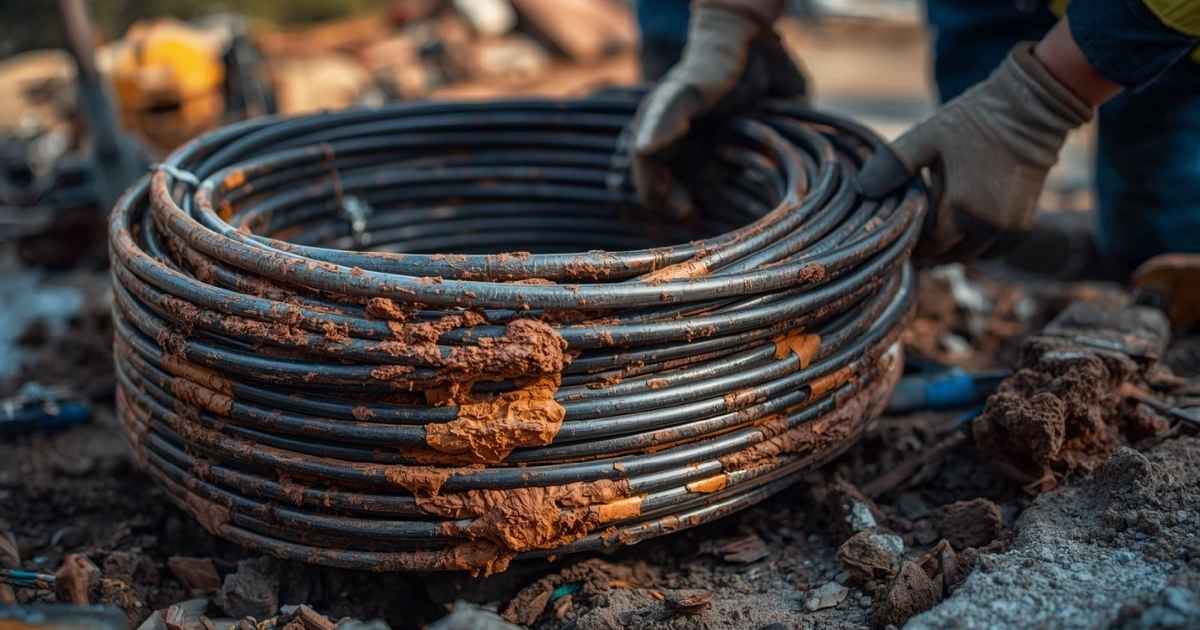
Rust is the number one killer of prestressing wire. You'd think it's just cosmetic, but even light surface oxidation creates stress concentration points where cracks start.
Why it happens: Wire is high-carbon steel with zero rust protection unless you order galvanized or coated varieties. Moisture from rain, humidity, or even concrete moisture triggers oxidation within hours. Store wire outdoors during a rainy season? You'll see orange rust developing in 2-3 days.
The real damage: Surface rust reduces effective cross-sectional area and creates micro-pitting that concentrates stress. A wire with 2% surface rust coverage can lose 5-8% of its tensile strength. Pitting corrosion is worse because it creates sharp notches that propagate cracks under cyclic loading.
How to prevent it:
Store all wire coils under waterproof covers or in climate-controlled warehouses
Keep coils off the ground using pallets or racks to prevent ground moisture contact
Use wire within 12 months of manufacture for optimal performance
Inspect incoming shipments immediately and reject any coils showing rust
For long-term storage, apply protective oil coating (check with your engineer first)
Field fix options: If you've got light surface rust (not pitting), wire brushing can clean it off. But here's the catch: once you see rust, you need to re-test tensile strength before installation. Don't assume it's still good. Plain PC wire 5mm with heavy rust should be rejected outright.
We've seen contractors try to save money by using rusty wire. It doesn't work. The wire fails during tensioning or shows premature relaxation. You end up buying replacement wire anyway, plus you've wasted labor threading and positioning the bad wire.
You spec 7mm wire, but measurements show 6.85mm in some spots and 7.15mm in others. That's a bigger problem than it sounds.
Why it happens: Poor manufacturing quality control during the drawing process. Each pass through a drawing die should reduce diameter consistently, but worn dies or improper lubrication create variations. Temperature changes during production also affect final dimensions.
The real damage: Diameter variations directly impact tensile strength calculations and anchorage grip. A 0.15mm undersized spot represents 4% less cross-sectional area and 4% less load capacity. Oversized sections won't fit properly through anchorage wedges, causing installation delays.
How to spot it: Use a micrometer to check diameter at multiple points along each coil. Standard tolerance is ±0.1mm, though quality manufacturers like TJ Wasungen maintain ±0.05mm. Measure at least three spots per meter on random samples from each delivery.
How to prevent it:
Source wire from manufacturers with verified quality control processes
Request diameter tolerance documentation with each shipment
Conduct receiving inspection with proper measuring tools
Reject coils that exceed tolerance limits before unloading
Impact on design: If your calculations assume exact 7mm diameter but actual wire averages 6.9mm, you're getting 97% of expected capacity across all wires. On a beam requiring 500 kN of prestress, that's 15 kN missing from your design. The beam might still pass short-term loading but could fail prematurely under service conditions.
This is why PC wire grades and standards exist. They specify not just minimum tensile strength but also diameter tolerance, surface quality, and straightness requirements. Follow the standards or face pc wire problems during installation.
Kinked wire is scrap wire. There's no fixing it, and trying to use kinked wire is asking for catastrophic failure.
Why it happens: Dropping coils from trucks, unwinding wire too fast, bending wire beyond its minimum radius, or pulling wire through tight spots with sharp edges. Construction sites are rough environments, and wire gets beat up during handling.
The real damage: A kink creates permanent plastic deformation with internal stress concentrations. The wire's microstructure is damaged at the kink point, reducing local tensile strength by 30-50%. During prestressing, the kinked section is the weakest link where failure initiates.
Minimum bend radius: Wire can handle gradual curves, but there are limits. For indented PC wire, minimum bend radius is typically 20-25 times the diameter. A 7mm wire needs at least 140-175mm radius curves. Anything tighter causes kinking.
How to prevent it:
Use proper lifting equipment rated for wire coil weight (coils can weigh 2-3 tons)
Unwind wire slowly and smoothly, not in jerking motions
Install rollers or guides at duct entrances to prevent sharp bends
Train workers on proper wire handling techniques before they touch materials
Inspect wire as it's unwound and immediately stop if you see kinks forming
Field reality check: We've watched workers drag wire across concrete edges, creating microscopic surface damage invisible to the eye but devastating under load. The wire looks fine, threads through ducts normally, and tensions without obvious problems. Then six months later, it fails during a load test because fatigue cracks propagated from those handling scratches.
Mark any kinked or damaged sections with spray paint and cut them out. Don't try to hide damage or hope it won't matter. It always matters in prestressed concrete.
Your wire tensions to the correct force, but then it slips back through the anchorage. That's lost prestress and potentially a dangerous structural condition.
Why it happens: Mismatched wire diameter and anchorage size, contaminated wire surface reducing friction, improper wedge seating, or over-tensioning that damages the wedge grip. Sometimes it's just low-quality anchorage components that don't meet specifications.
The real damage: Slippage during stressing is obvious and gets caught immediately. Slippage after concrete placement is sneaky and dangerous. The beam thinks it has full prestress, but actual force is 10-20% lower. This shows up as excessive deflection, cracking, or complete failure under service loads.
How to prevent it:
Verify anchorage components match your exact wire diameter before ordering
Clean wire surface before threading through anchorages (remove oil, dust, rust)
Follow manufacturer's installation procedures for wedge seating depth
Use calibrated jacking equipment with accurate force and elongation measurement
Conduct lock-off checks 24 hours after stressing to verify force retention
Compatibility matters: You can't use anchorages designed for 5mm wire with 7mm wire and expect it to work. The wedge taper won't match, grip won't engage fully, and slippage is guaranteed. Prestressed anchorage devices are precision-engineered for specific wire sizes.
Surface treatment impact: Helical PC wire 5mm provides better grip than plain wire because the spiral ribs create mechanical interlock. If you're having slippage issues with plain wire, switching to indented or helical surface treatment often solves the problem.
Here's a field technique: after initial tensioning, mark the wire at the anchorage face with permanent marker. Check 24 hours later and again before concrete placement. If the mark has moved, you've got slippage and need to investigate why before proceeding.
Your wire breaks during tensioning at 65% of rated capacity. The test certificate says it should handle much more. What gives?
Why it happens: Fake or inaccurate test certificates, wire from a different production batch than certified, environmental degradation after testing, or legitimate manufacturing defects that slipped through quality control.
The real damage: Under-strength wire forces you to halt construction, redesign the prestressing layout, order replacement wire, and possibly demolish already-placed concrete if the problem isn't caught early enough. We're talking $50,000-$200,000 in direct costs plus schedule delays.
How to verify certificates:
Check that certificate numbers match coil tag numbers exactly
Verify testing lab has proper accreditation (ISO 17025 or equivalent)
Look for specific data: actual breaking loads, test dates, sample locations
Generic certificates without coil-specific information are red flags
Contact the testing lab directly if something seems suspicious
Independent verification: For large projects, conduct random field testing on 5-10% of delivered coils. Cut 600mm samples and send them to an independent lab. If results differ from certified values by more than ±3%, you've got a problem worth investigating.
TJ Wasungen provides batch-specific test certificates with traceable coil numbers and actual test data from the production run. Every certificate includes:
Five individual sample breaking loads (not just averages)
Calculated tensile strength in MPa
Elongation percentages at failure
Testing date and lab accreditation details
Quality inspector signature and stamp
Don't accept vague certificates claiming "meets ASTM A421" without showing actual test results. Numbers matter because your structure's safety depends on them.
You're tensioning to 40 kN, but elongation measurements are way off from calculations. Either you've got bad wire or bad measurement technique.
Why it happens: Incorrect free length measurement (measuring from the wrong reference point), temperature effects on the wire during tensioning, friction losses in ducts not accounted for, elastic shortening of the beam during multi-wire tensioning, or actual wire property variations.
The real damage: If you can't verify correct prestressing force through elongation checks, you don't actually know how much force is in the wire. You might be under-stressing (unsafe structure) or over-stressing (wire failure risk). Either way, you're flying blind.
Correct measurement procedure:
Mark the free length before tensioning (from jack to anchorage or between fixed points)
Measure temperature and adjust modulus if needed (steel properties change with temp)
Account for friction losses based on duct path geometry
Calculate expected elongation: ΔL = (Force × Length) ÷ (Area × Modulus)
Measure actual elongation at the same points you marked initially
Compare actual vs. expected (should match within ±6%)
Common mistakes: Measuring from the wrong reference point is the biggest error. If your free length measurement is off by 1 meter on a 30-meter tendon, your elongation calculation is 3% wrong before you even start. Temperature matters too. A 20°C temperature difference changes elastic modulus enough to throw off calculations by 2-3%.
What to do when elongation doesn't match: First, double-check your measurement points and calculations. Second, verify your jacking force with a calibrated gauge. Third, check for unusual friction losses (kinked duct, grout contamination, misaligned path). If everything checks out and elongation is still wrong, suspect wire properties don't match specifications and conduct field testing.
PC wire manufacturing process should produce consistent modulus values around 200 GPa. If you're seeing modulus values outside 195-205 GPa range based on elongation measurements, the wire quality is questionable.
This is the sneaky one. Wire seems fine during installation, passes all checks, and then fails weeks or months later without warning.
Why it happens: Hydrogen atoms absorbed into the steel lattice during manufacturing, pickling, or electroplating processes. The hydrogen makes steel brittle, but the effects aren't immediate. Under sustained tensile stress, hydrogen migrates to high-stress zones and eventually causes cracking.
The real damage: Sudden wire fracture without warning signs. This typically happens at 60-90% of ultimate tensile strength after the wire has been under load for weeks or months. It's particularly dangerous because there's no advance indication of impending failure.
Risk factors:
Wire exposed to acidic environments during production or storage
Galvanized wire with improper hydrogen bake-out after coating
Wire stored in high-humidity environments for extended periods
Contamination with hydrogen sulfide or other hydrogen-bearing chemicals
How to prevent it:
Source wire from manufacturers following proper hydrogen control procedures
Request hydrogen embrittlement test results (ASTM F519 method)
Use wire within 12 months of manufacture
Store in dry conditions away from chemical exposure
For critical applications, specify stress-relieved wire grades
Detection is difficult: Standard tensile tests don't catch hydrogen embrittlement because the test happens too fast. The wire breaks at normal strength values during testing, but slow crack growth happens under sustained loading. Specialized testing requires holding wire under stress for 200+ hours while monitoring for delayed fracture.
TJ Wasungen uses controlled heat treatment processes that drive out hydrogen during wire production. The patenting and stress-relieving steps are specifically designed to prevent hydrogen embrittlement in finished wire.
If you suspect hydrogen embrittlement (unexplained wire failures weeks after installation), stop using wire from that batch immediately and contact your supplier for investigation. This isn't something to mess around with.
You're running multiple wires through a duct, and they're rubbing against each other during tensioning. That friction creates uneven stress distribution and potential failure points.
Why it happens: Insufficient duct size for the number of wires, improper wire spacing during threading, lack of intermediate spacers in long ducts, or attempts to pack too many wires into limited space to save on duct costs.
The real damage: Wire-to-wire friction during tensioning creates localized heating and surface wear. This reduces effective tensile strength at contact points and creates uneven force distribution within the bundle. Some wires carry more load than others, leading to premature failure of the overstressed wires.
Proper duct sizing: Duct internal diameter should be at least 2.0-2.5 times the bundled wire diameter. For six 7mm wires in a hexagonal pattern, bundled diameter is about 21mm, so you need minimum 42-50mm duct. Cramming them into a 35mm duct creates friction problems.
How to prevent it:
Follow duct sizing guidelines from design codes (ACI, Eurocode, etc.)
Use spacers every 3-5 meters in long duct runs to maintain wire separation
Thread wires simultaneously and symmetrically rather than one at a time
Lubricate duct interior if friction is expected (check specifications first)
Consider fewer larger-diameter wires instead of many smaller ones
Comparison to strand: PC wire vs PC strand shows that strand has an advantage here. The seven wires in a strand are pre-twisted together, so they move as a unit during tensioning. Individual loose wires can shift and tangle, especially in curved ducts.
Field observation: Listen during tensioning. If you hear scraping or grinding sounds as the jack extends, that's wires rubbing against the duct or each other. Stop tensioning, investigate the cause, and fix it before proceeding. Forcing wires through high-friction ducts damages the wire and compromises structural performance.
Wire sitting in your yard for 18 months isn't the same quality as wire used within 3 months of manufacture. Material properties degrade over time.
Why it happens: Atmospheric exposure causes surface oxidation and hydrogen absorption. UV radiation from sunlight can degrade protective coatings. Temperature cycling creates microstructural changes. Even properly stored wire degrades slowly over time.
The real damage: Tensile strength drops 2-5% per year during extended storage. Relaxation characteristics worsen, meaning the wire loses prestressing force faster under load. Ductility decreases, making wire more brittle and prone to sudden fracture.
Shelf life guidelines:
Use wire within 12 months of manufacture for best results
Wire stored 12-18 months should be re-tested before use
Wire older than 18 months should be rejected unless recent testing confirms properties
Coated or galvanized wire has slightly longer shelf life than plain wire
How to track age: Coil tags should show manufacturing date. If they don't, request manufacturing date documentation from your supplier. Don't accept wire without clear date codes.
Storage conditions matter: Wire stored indoors in climate-controlled conditions degrades much slower than wire stored outdoors exposed to weather. A coil stored properly for 18 months might outperform a coil stored poorly for 6 months.
Economic reality: Sometimes you've got wire sitting in inventory because project delays or order surplus. Don't automatically assume it's bad, but don't assume it's good either. Test it before use. A $200 tensile test prevents $20,000 in structural problems.
PC wire price fluctuates with steel markets, which tempts contractors to stockpile wire during price dips. That's fine if you've got proper storage facilities and will use it within a year. Otherwise, you're risking material degradation that costs more than the price savings.
You receive 20 coils supposedly from the same production batch, but testing shows strength variations of 8-12% between coils. That's a manufacturing quality control problem.
Why it happens: Inconsistent steel chemistry between heats, variation in drawing die wear during production, improper heat treatment temperature control, or mixing coils from different production runs under a single batch number.
The real damage: Design calculations assume consistent wire properties across all wires in a structure. Large batch-to-batch variation means some wires are under-stressed while others are over-stressed. This creates uneven force distribution and unpredictable structural behavior.
Acceptable variation: Standard practice allows ±3% strength variation within a production batch. Anything larger suggests quality control problems. Similarly, diameter should vary less than ±0.05mm and elongation properties should stay within ±0.5% across all samples.
How to catch it: Test multiple coils from each delivery, not just one. If you're receiving 50 coils, test at least 5-8 random samples. Plot the results. If you see significant scatter in the data, you've got consistency problems worth investigating.
Traceability requirements: Every coil should have a unique tag number traceable to production records. TJ Wasungen marks each coil with batch number, production date, diameter, and weight. This allows tracking back to raw material heat numbers and production parameters if problems arise.
Supplier responsibility: Quality manufacturers conduct their own internal testing and reject inconsistent batches before shipping. Cheap wire from unknown sources often skips this quality control, which is why it's cheap. You get what you pay for in prestressing materials.
We've covered the common pc wire problems that hit construction sites, but prevention starts at the manufacturing level. Here's what TJ Wasungen does differently.
Raw material control: Every steel billet gets chemistry testing before wire drawing begins. Carbon content, manganese, silicon, and sulfur levels must meet specifications or the heat gets rejected. You can't make quality wire from inconsistent steel.
Process monitoring: Wire drawing happens in controlled stages with die wear tracked daily. Each die position gets measured for size, and worn dies get replaced before they create diameter variations. Temperature during heat treatment is monitored with calibrated thermocouples and recorded for every batch.
Multi-stage testing: Wire gets tested during production (not just at the end), allowing early detection of property drift. Final testing uses five samples per coil minimum, with actual breaking loads recorded for traceability.
Proper packaging: Coils get wrapped in waterproof material before shipping. Tags are attached securely with batch data, manufacturing date, and handling instructions. Each container includes silica gel packets to absorb moisture during ocean transport.
Documentation: Complete test certificates, material composition data, and traceability records ship with every order. No generic certificates or vague "meets specifications" claims.
The result? Fewer pc wire problems on construction sites, which means faster installation, fewer delays, and structures that perform exactly as designed for their full service life.
TJ Wasungen manufactures PC wire in diameters from 3mm to 9mm with verified tensile strength ratings and complete quality documentation. Every production batch undergoes five-sample testing with certified results provided for each coil. The wire meets international standards including ASTM A421, ISO 6934, and BS 5896, ensuring consistent performance across global infrastructure projects.
Whether you're building bridges in Africa, commercial structures in South America, or industrial facilities in Central Asia, preventing pc wire problems starts with sourcing quality materials from manufacturers with proven quality control processes. Contact TJ Wasungen for technical specifications, test certificates, and engineering support that helps you avoid common prestressing wire failures before they impact your project schedule and budget.


