


Views: 0 Author: Site Editor Publish Time: 2026-01-20 Origin: Site


Plain PC wire is the unsung hero of prestressed concrete work. You won't see it on flashy project photos, but it's doing the heavy lifting inside countless bridges, buildings, and infrastructure projects across Africa and beyond.
At TJ Wasungen, we've shipped tons of prestressing wire to construction sites where engineers need serious tensile strength without the bulk of larger materials. Here's the straight story on what plain PC wire actually is, where it works best, and why you might choose it over alternatives.
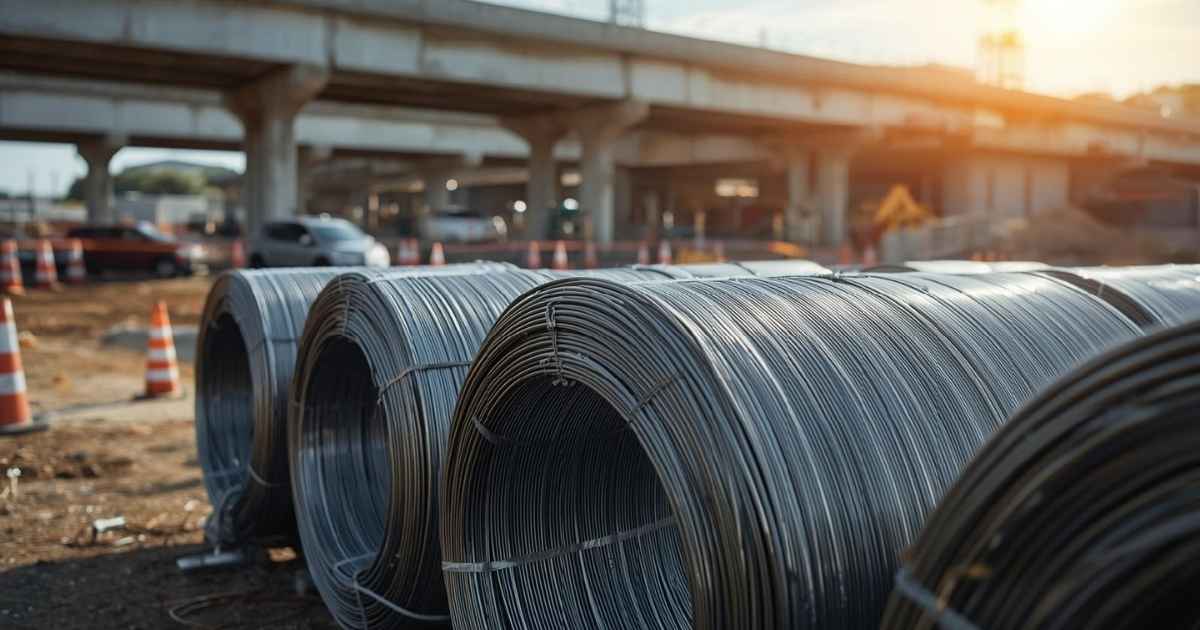
Let's cut through the technical jargon. Plain PC wire (PC stands for prestressed concrete) is high-strength steel wire used to reinforce concrete structures. Unlike regular steel reinforcement, this stuff gets stretched (prestressed) before the concrete sets.
The "plain" part means it's got a smooth surface without any coating like zinc or epoxy. It's bare steel, manufactured to strict standards, and designed to handle massive tensile loads.
Prestressing wire typically comes in diameters from 3mm to 7mm, with 5mm and 7mm being most common. The steel is cold-drawn, which means it's pulled through dies to reduce diameter and increase strength. This process creates tensile strengths around 1570-1770 MPa (that's roughly 228,000-257,000 psi if you're still thinking in imperial units).
Think of it as the difference between a regular rubber band and a super-strength one. Both stretch, but plain PC wire can handle way more force before breaking.
Here's where people get confused. Both plain PC wire and PC strand serve prestressing purposes, but they're not the same thing.
Plain PC wire consists of a single cold-drawn steel wire. One piece. That's it.
PC strand bundles multiple wires together (usually seven) twisted in a helical pattern. It's thicker, stronger per unit, and handles different applications.
So when do you pick wire over strand? Prestressing wire works better for:
Smaller concrete elements
Pre-tensioned products manufactured in controlled factory settings
Applications needing precise force distribution
Projects where multiple individual wires give more flexibility than bundled strands
PC strand wins when you need higher capacity per unit, easier handling of larger forces, or post-tensioning applications. We've covered this comparison in detail in our PC wire vs PC strand guide.
Plain PC wire delivers tensile strengths between 1570-1770 MPa depending on diameter and manufacturing standards. That's about 7-8 times stronger than regular mild steel reinforcement.
This strength lets you span longer distances, carry heavier loads, and use less material overall. A thin wire does the work of much thicker conventional reinforcement.
Steel needs to stretch a bit before breaking. This ductility prevents sudden, catastrophic failures. Prestressing wire elongates 3-7% before fracture, giving you warning signs if something's going wrong.
Brittle materials snap without warning. Ductile ones bend, deflect, and show distress. That's the safety margin you want in structural applications.
Modern PC wire production maintains tight tolerances on diameter, strength, and surface quality. You're getting predictable material properties that engineers can design around with confidence.
At TJ Wasungen, every production batch gets tested for tensile strength, elongation, and dimensional accuracy. Mill certificates document exact properties so there's no guessing.
Plain PC wire loses some prestressing force over time through a process called relaxation. High-quality wire minimizes this loss to less than 2.5% after 1,000 hours at 70% of ultimate strength.
Less relaxation means better long-term performance. Your structure maintains its prestress force for decades, not just years.
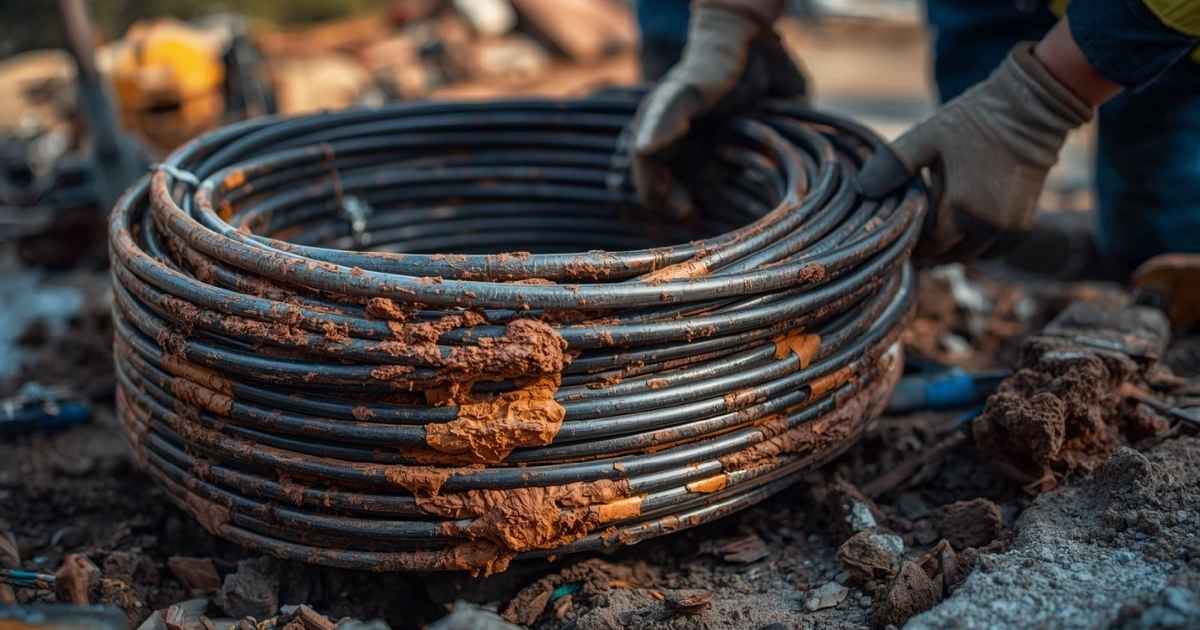
This is where plain PC wire really shines. Pre-tensioning means you stretch the wire first, pour concrete around it, then release the tension after the concrete hardens. The compressed concrete resists cracking and carries loads more efficiently.
Prestressing wire works perfectly in:
Railway sleepers (railroad ties): These take repetitive impact loads from passing trains. Pre-tensioned with PC wire, they last decades longer than unreinforced versions.
Concrete poles: Power transmission poles, street lighting poles, and utility poles use prestressed wire to resist bending from wind and cable loads.
Hollow core slabs: Floor and roof slabs for buildings use pre-tensioned PC wire to span distances up to 15 meters without intermediate supports.
Concrete piles: Foundation piles driven into soil need to resist driving forces and lateral loads. Pre-tensioning with wire provides that capacity.
We've supplied 5mm prestressing wire for railway sleeper projects across Kenya and Uganda, where the tracks handle heavy freight traffic. Those sleepers are still performing strong after years of use.
Precast concrete plants manufacture beams in controlled factory conditions, then ship them to job sites. Plain PC wire allows these facilities to produce consistent, high-quality prestressed beams.
The typical process:
Stretch prestressing wires between fixed anchors in a long casting bed
Apply tension (usually 70-80% of ultimate strength)
Pour concrete around the tensioned wires
Let concrete cure to specified strength
Release wire tension, which transfers prestress force to concrete
Cut individual beams from the continuous casting
This method produces dozens of identical beams in one casting cycle. Plain PC wire is easier to handle than heavier strand in these multi-wire applications.
Bridges need to span distances and carry dynamic vehicle loads. Prestressing wire appears in various bridge applications:
Girder bridges use pre-tensioned beams with PC wire as the main spanning elements. The prestress counteracts the bending from traffic loads.
Cable-stayed bridges sometimes use bundles of prestressing wire as the stay cables connecting the deck to towers. The wire's high strength-to-weight ratio makes long spans possible.
Smaller pedestrian bridges and rural road bridges across Africa use prestressed beams manufactured with plain PC wire. These structures provide reliable crossings at reasonable costs.
Heavy industrial facilities need floors that can handle point loads from machinery, forklifts, and storage racks. Prestressed concrete flooring with PC wire delivers that capacity while minimizing thickness.
Thinner floors mean:
Lower material costs
Reduced dead weight on foundations
Faster construction
More usable building height
Warehouses, manufacturing plants, and logistics centers across South America use this approach. The prestressed floors handle years of heavy use with minimal cracking or maintenance.
Pipes, tanks, and channels for water distribution and wastewater treatment benefit from prestressed concrete. Plain PC wire provides the circumferential prestressing in:
Prestressed concrete pipes carry water under pressure for irrigation, municipal supply, and industrial use. The wire wrapping resists internal pressure and external loads from burial.
Circular tanks for water storage use prestressing wire to contain the outward forces from stored liquid. This prevents cracking and water loss.
Rectangular tanks and channels combine PC wire with other reinforcement to create watertight structures that last for decades.
You can't just pull any steel wire and call it prestressing material. Specific standards define what qualifies as plain PC wire.
The American standard ASTM A421 covers uncoated stress-relieved steel wire for prestressed concrete. It specifies minimum tensile strength, elongation requirements, and testing procedures.
Common grades include:
Type BA: 235 ksi (1620 MPa) minimum
Type WA: 250 ksi (1725 MPa) minimum
Most modern applications use Type WA for higher strength and better performance.
The British standard BS 5896 covers wire and strand for prestressing. It's widely used across African countries with British colonial history.
BS 5896 specifies wire by diameter and strength class. You'll see designations like "7mm wire, Grade 1570" which means 7mm diameter with 1570 MPa minimum tensile strength.
The European standard EN 10138 Part 2 covers wire for prestressing concrete. It uses the designation system like Y1770C, which breaks down as:
Y = prestressing steel
1770 = tensile strength in MPa
C = wire (C stands for "Cordon" in French)
European projects and some South American work reference this standard.
China's GB/T 5223 standard covers prestressed concrete wire. As Chinese construction materials enter global markets, you're seeing more specs reference this standard.
At TJ Wasungen, we manufacture to multiple standards depending on your project location and requirements. Check our PC wire collection for available products and specifications.
Plain PC wire needs proper handling to maintain its properties and perform as designed.
Store wire in dry conditions protected from moisture. Rust on the surface reduces bond with concrete and can compromise strength.
Keep wire off the ground on pallets or racks. Cover it with tarps if stored outside, but indoor storage is better.
Prestressing wire is strong in tension but can be damaged by sharp bends or kinks. Handle coils carefully and don't drop them.
When uncoiling wire, let it come off naturally without forcing it. Kinks create stress concentrations that reduce effective strength.
Anchor points for pre-tensioning need to resist the full force of all wires being stressed. We're talking tens or hundreds of tons of total force.
Use calibrated jacks and load cells to tension wire to specified levels. Visual estimation won't cut it. You need accurate measurements.
Monitor elongation during stressing. The wire should stretch proportionally to applied force. If it doesn't, something's wrong (slipping anchor, damaged wire, or calculation error).
Cut prestressing wire with proper tools. Bolt cutters or hacksaws work for small quantities. Abrasive saws handle production cutting in precast plants.
Don't torch-cut PC wire. The heat affects steel properties near the cut and can cause premature failure.
After releasing prestress force, cut wires flush with concrete ends. Projecting wire creates safety hazards and corrosion risks.
Plain PC wire typically costs less per pound than PC strand. For precast plants making thousands of small elements, this adds up to real savings.
The single-wire format also reduces waste. You use exactly what you need without leftover pieces of expensive strand.
Multiple individual wires let you distribute prestressing force exactly where needed. Place wires closer together in high-stress zones and spread them out elsewhere.
PC strand comes in discrete units with fixed capacity. Prestressing wire gives you finer control over prestress patterns.
Stringing dozens of individual wires is often faster than handling equivalent numbers of heavier strands. The lighter weight per unit reduces physical effort and equipment requirements.
Precast plants with automated wire-pulling systems can process plain PC wire very efficiently.
Some prestressed elements need curved prestressing profiles. Plain PC wire bends more easily than the stiffer bundled construction of PC strand.
This flexibility matters in complex precast shapes or members with varying depth.
One 5mm prestressing wire carries maybe 27-35 kN of force. One 12.7mm PC strand handles 180-250 kN. When you need high forces, using enough individual wires becomes impractical.
Post-tensioning applications almost always use strand because of this capacity difference.
Threading 50 individual wires through forms takes longer than placing 10 strands. The per-unit labor adds up.
Automated systems in precast plants mitigate this, but field applications face real labor challenges.
Plain PC wire has no protective coating. In aggressive environments (marine, industrial, or high chloride exposure), it's more vulnerable to corrosion than epoxy-coated wire or galvanized products.
Adequate concrete cover and quality concrete provide basic protection, but harsh conditions might require coated wire products.
Small precast products work great with plain PC wire. Larger elements might need PC strand for practical reasons.
Railway sleepers: 5-7mm wire works perfectly
Bridge girders: Usually better with strand unless the beam design specifically calls for wire
Specify wire meeting local standards. ASTM A421 in the Americas, BS 5896 in Commonwealth Africa, EN 10138 in Europe-influenced markets.
Using the wrong standard creates procurement headaches and potential compliance issues.
Benign indoor conditions? Plain PC wire is fine.
Coastal exposure, industrial chemicals, or de-icing salts? Consider coated options.
The modest upfront cost of protection pays off through extended service life.
Not all wire suppliers maintain the quality control needed for prestressing applications. Look for:
Mill test certificates with actual properties
Compliance with relevant standards
Consistent diameter and strength
Clean surface free from rust and defects
Our guide to testing PC wire quality covers what to check when receiving material.
We ship prestressing wire to projects across challenging markets:
Africa: We serve Kenya, Tanzania, Uganda, Nigeria, Ghana, South Africa, Ethiopia, and other countries where infrastructure development demands quality materials. Our plain PC wire goes into railway projects, bridge construction, and precast plants across the continent.
South America: Projects in Brazil, Peru, Colombia, and Chile use our wire products for various prestressing applications.
Central Asia: Construction in Kazakhstan, Uzbekistan, and neighboring regions relies on our prestressed concrete wire for bridges and buildings.
Don't see your location listed? We ship worldwide. Contact TJ Wasungen to discuss your specific requirements.
Plain PC wire has a smooth surface that bonds with concrete through basic mechanical friction. Indented wire has small impressions along its length that increase mechanical interlock with concrete. Both work fine, but indented wire provides slightly better bond in some applications. The smooth surface of plain wire is easier to clean and inspect.
Not typically. Post-tensioning needs higher capacity per unit, which PC strand provides more efficiently. You'd need impractical numbers of individual wires to match strand capacity. Stick with wire for pre-tensioning and use strand for post-tensioning work.
With proper concrete cover (minimum 40-50mm) and quality concrete, prestressing wire can last 75-100+ years. The alkaline environment inside concrete protects steel from corrosion. Poor concrete quality or inadequate cover reduces service life significantly.
5mm and 7mm are most common. Smaller diameters (3-4mm) work for very small precast elements. Larger sizes (8-9mm) appear in specialized applications. Your structural engineer calculates required prestressing force, which determines how many wires of what diameter you need.
Per pound, yes. Per unit of prestressing force delivered, it depends. For small precast elements made in high volume, wire is usually more economical. For larger structural elements, strand often wins despite higher material cost because of reduced labor and simpler handling.
TJ Wasungen supplies prestressing wire meeting international standards to projects across Africa, South America, and Central Asia. Browse our PC wire products or contact our technical team to discuss your specific needs.
Plain PC wire might not be the flashiest construction material, but it's been quietly enabling better concrete structures for decades. From railway sleepers carrying freight trains across Africa to precast beams in South American buildings, this high-strength wire delivers reliable performance.
At TJ Wasungen, we've supplied prestressing wire for hundreds of projects where engineers needed proven materials they could count on. Whether you're manufacturing precast elements, building bridges, or working on infrastructure projects, we've got the products and technical support to help you succeed.
Need to discuss which prestressing wire specification fits your project? Our team understands the real-world challenges you face and can recommend the right solution. Visit TJ Wasungen or explore our complete PC wire collection to get started.


